
High-volume T-shirt printing requires more than simply producing a large number of garments. Clothing brands and textile manufacturers also need consistency, detail, production efficiency and a printing method that matches the artwork.
Traditional printing technologies can be highly effective for many bulk orders, but modern fashion collections increasingly use detailed graphics, gradients, photographic elements and large numbers of colors.
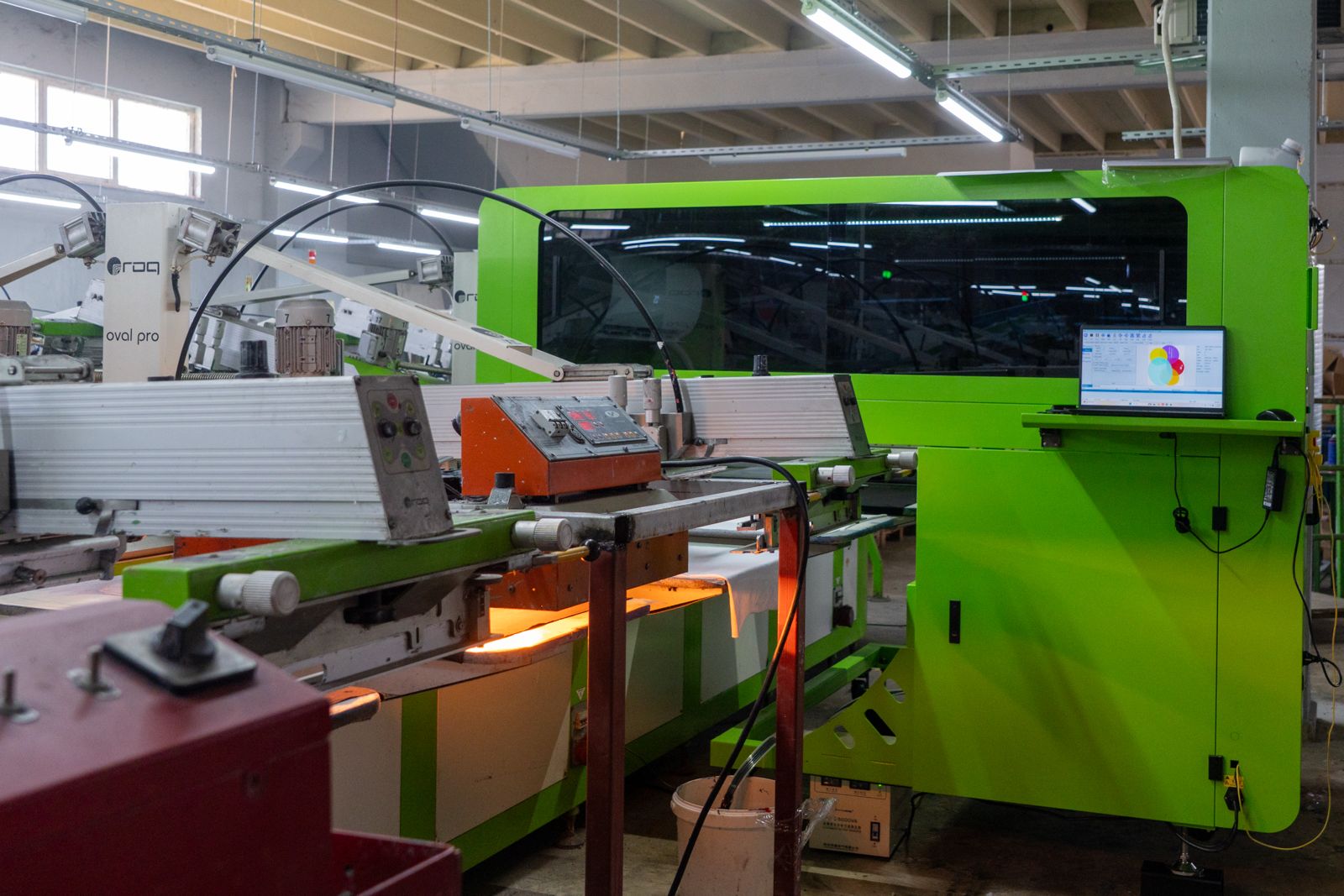
For these types of projects, Hybrid DTG printing can provide an important production advantage by combining conventional textile printing stages with digital printing technology.
This makes Hybrid DTG particularly relevant for professional garment production where complex artwork and higher quantities need to be managed together.
What Is High-Volume T-Shirt Printing?
High-volume T-shirt printing refers to professional production in which the same garment or collection is printed in larger quantities.
This can include projects for:
- Fashion brands
- Streetwear labels
- Retail collections
- Private label brands
- Promotional clothing
- Corporate apparel
- Textile manufacturers
As quantity increases, consistency becomes increasingly important.
Every garment should maintain similar print colors, positioning, dimensions and overall visual quality throughout the production run.
What Is Hybrid DTG Printing?
Hybrid DTG printing combines conventional textile printing processes with digital Direct to Garment technology.
The exact production configuration depends on the equipment and system, but the goal is to integrate detailed digital color printing into a professional garment production workflow.
This combination can be particularly useful when the design is too complex for a simple conventional workflow but the project also requires larger production quantities.
For a full explanation, read our Hybrid DTG Printing guide.
Why Does Printing Technology Matter in High-Volume Production?
As production quantities increase, the printing method can affect:
- Production speed
- Consistency
- Artwork flexibility
- Color reproduction
- Cost structure
- Quality control
- Overall production planning
A printing method that works well for a small sample order may not always be the most efficient solution for a larger production run.
At the same time, a method optimized for simple bulk production may not be ideal for complex digital artwork.
Benefits of Hybrid DTG for High-Volume T-Shirt Printing
1. Suitable for Detailed Artwork
One of the most important advantages of Hybrid DTG is its ability to reproduce complex digital artwork.
This can include:
- Fine illustrations
- Photographic graphics
- Gradients
- Complex textures
- Large graphic compositions
- Multiple color transitions
For brands using highly detailed visual designs, this can provide greater creative freedom.
2. Multi-Color Printing Flexibility
Traditional screen printing generally requires separate screen preparation for individual colors.
As the number of colors increases, preparation can become more complex.
Hybrid DTG uses digital technology for detailed color reproduction, allowing complex multi-color artwork to be managed through a digital workflow.
3. Useful for Larger Production Quantities
Hybrid DTG is particularly relevant when digital design flexibility needs to be combined with a professional production environment.
For larger orders containing complex designs, this can provide an alternative to relying entirely on traditional DTG or creating many separate screens for conventional production.
4. Greater Design Flexibility
Fashion brands often produce collections containing multiple designs rather than one repeated graphic.
A digital workflow can make it easier to manage:
- Different artworks
- Color variations
- Limited collection designs
- Seasonal graphics
- Multiple SKUs
This flexibility can be important for modern clothing brands with varied collections.
5. Suitable for Fashion and Streetwear Collections
Streetwear and fashion brands often use highly visual graphics as part of their identity.
Large back prints, photographic artwork, illustrations and complex front graphics can all benefit from digital printing capabilities.
Hybrid DTG can therefore be particularly relevant for brands producing graphic-heavy collections at professional quantities.
Traditional DTG vs Hybrid DTG for High-Volume Printing
Traditional DTG and Hybrid DTG both use digital printing, but their production workflows are different.
| Feature | Traditional DTG | Hybrid DTG |
|---|---|---|
| Printing Process | Direct digital garment printing | Combination of conventional and digital stages |
| Artwork Detail | Excellent | Excellent |
| Multi-Color Designs | Excellent | Excellent |
| Production Approach | Digital-focused workflow | Integrated production workflow |
| High-Volume Potential | Depends on production equipment and project | Can be particularly relevant for larger professional orders |
You can learn more about traditional DTG in our DTG Printing guide.
Hybrid DTG vs Screen Printing for Bulk Orders
Screen printing is one of the most established technologies for high-volume garment production.
It can be extremely efficient when the same relatively simple design is repeated across many garments.
However, when artwork contains a large number of colors, gradients or photographic details, screen preparation can become more complex.
Hybrid DTG can provide an alternative when digital artwork complexity is high.
| Feature | Hybrid DTG | Screen Printing |
|---|---|---|
| Highly Detailed Artwork | Excellent | Requires more complex preparation |
| Photographic Designs | Highly suitable | Requires specialized separations |
| Many Colors | Digital color flexibility | More colors generally mean more screens |
| Simple Repetitive Designs | Possible | Often highly efficient |
| High-Volume Production | Relevant for complex digital projects | Excellent for many repetitive orders |
Hybrid DTG vs DTF for High-Volume Printing
DTF uses a transfer-based production process, while Hybrid DTG integrates direct digital printing with conventional textile production stages.
Both methods can reproduce detailed and multi-color artwork.
The correct choice depends on:
- Fabric
- Garment type
- Artwork
- Desired print feel
- Quantity
- Production workflow
For a detailed comparison of DTG and DTF technologies, see our DTG vs DTF Printing guide.
What Products Can Be Produced with Hybrid DTG?
Depending on the production equipment and fabric compatibility, Hybrid DTG may be considered for:
- T-shirts
- Sweatshirts
- Hoodies
- Streetwear garments
- Fashion collections
- Branded clothing
- Various cotton-rich garments
The actual textile should be evaluated before production to confirm compatibility with the intended printing process.
Why Is Hybrid DTG Important for Clothing Brands?
Clothing brands often need more than just printing capacity.
They also need flexibility.
Collections can contain multiple graphics, colorways and garment types.
Hybrid DTG can provide advantages when a brand needs:
- Detailed designs
- Large quantities
- Multiple artwork variations
- Consistent professional production
- Collection flexibility
This makes the technology particularly relevant to brands with strong graphic identities.
How Important Is Consistency in High-Volume Printing?
Consistency is one of the most important quality requirements in bulk garment production.
A production run should be monitored for:
- Color consistency
- Print position
- Print dimensions
- Detail reproduction
- Garment-to-garment variation
Small inconsistencies that may be less noticeable in a few samples can become significant across thousands of garments.
This is why quality control must be integrated into the entire production process.
Should You Produce a Sample Before High-Volume Printing?
Yes. A production sample is strongly recommended before a large order is approved.
The sample allows the brand to evaluate:
- Color accuracy
- Print position
- Print size
- Artwork detail
- Surface appearance
- Garment compatibility
Once approved, the sample can serve as a reference for the production run.
What Affects the Cost of High-Volume T-Shirt Printing?
The cost of bulk garment printing depends on multiple variables.
These may include:
- Total order quantity
- Printing technology
- Garment type
- Fabric composition
- Artwork complexity
- Print dimensions
- Number of print locations
- Number of different designs
- Production preparation
- Finishing requirements
For this reason, high-volume pricing should be calculated according to the actual project rather than using one fixed cost model.
Does the Unit Price Decrease as Quantity Increases?
In many garment printing projects, larger production quantities can improve production efficiency and may reduce certain setup costs per garment.
However, this does not mean every high-volume order will have the same pricing structure.
A large order with simple artwork can have very different production costs from an equally large order containing complex, multi-color graphics.
How to Choose the Right Method for High-Volume T-Shirt Printing
Before choosing a printing method, evaluate:
- Fabric composition
- Garment color
- Total quantity
- Artwork complexity
- Number of colors
- Number of different designs
- Print area
- Required print feel
- Quality expectations
Our Textile Printing Methods guide provides a broader comparison of the main production technologies.
High-Volume T-Shirt Printing in Turkey
Turkey has a strong textile and garment manufacturing ecosystem and serves clothing brands across Europe and international markets.
For brands sourcing production from Turkey, working with a professional textile printing manufacturer can simplify garment and printing production within the same supply chain.
When searching for a high-volume T-shirt printing manufacturer in Turkey, brands should evaluate:
- Printing technology
- Production experience
- Fabric knowledge
- Sample development
- Capacity
- Quality control
- Consistency
- Communication
Professional High-Volume T-Shirt Printing with Efor Baskı
Efor Baskı provides professional textile printing solutions for clothing brands, textile manufacturers and garment production projects.
For high-volume projects, the garment, fabric, artwork and quantity can be evaluated together to determine an appropriate printing solution.
Hybrid DTG can be particularly relevant for collections requiring detailed, multi-color graphics within a professional production workflow.
If you are looking for high-volume T-shirt printing in Turkey or need a printing partner for your clothing brand, contact Efor Baskı to discuss your project and production requirements.