
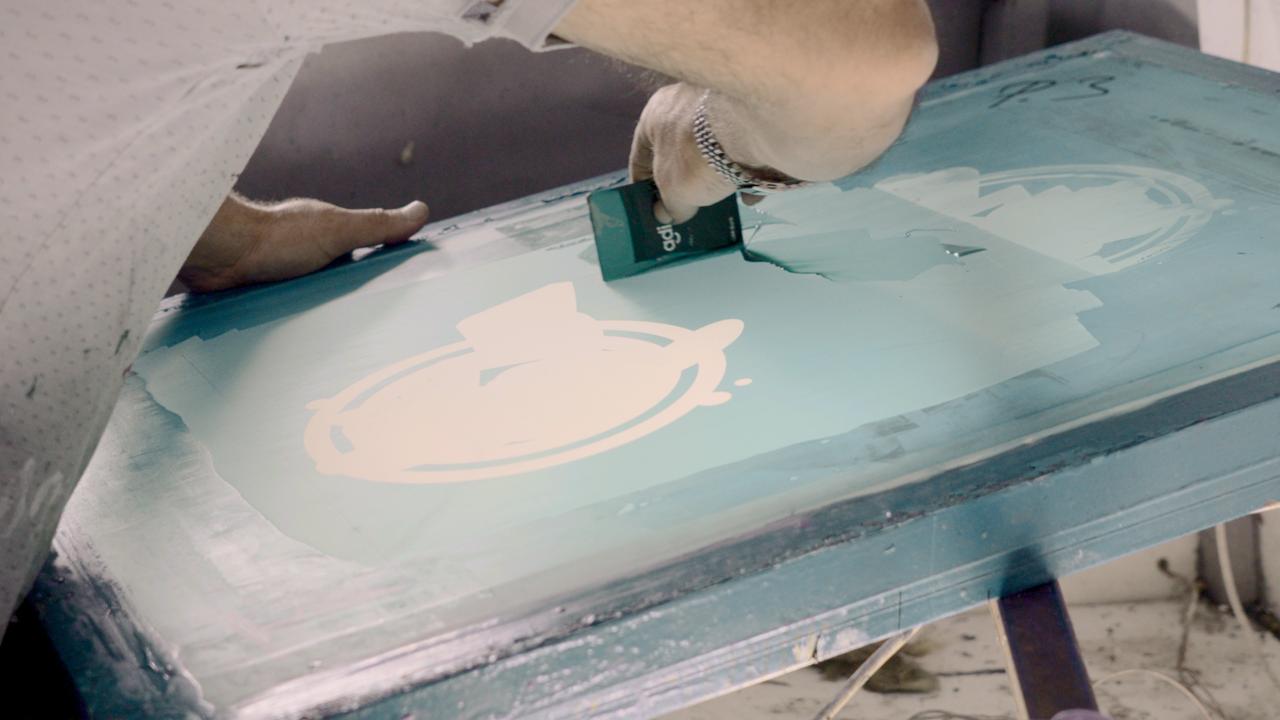
Choosing the right textile printing manufacturer is an important decision for any clothing brand.
A successful garment collection depends not only on the design and fabric but also on how consistently those designs can be reproduced during production.
Print quality, color consistency, fabric compatibility, production capacity, sampling and communication can all influence the final product.
This becomes even more important when moving from a small collection to professional or bulk garment production.
In this guide, we explain the key factors clothing brands should consider when selecting a professional textile printing partner.
What Is a Textile Printing Manufacturer?
A textile printing manufacturer is a production partner that applies graphics, patterns, logos or other designs to garments and textile products using professional printing technologies.
Depending on its equipment and expertise, a textile printing manufacturer may work with methods such as:
- DTG printing
- Hybrid DTG printing
- Screen printing
- Transfer-based technologies
- Specialized textile printing applications
The appropriate technology should be selected according to the fabric, artwork, order quantity and intended use of the garment.
For a comparison of the main technologies, see our Textile Printing Methods guide.
Why Is Choosing the Right Printing Manufacturer Important?
The printing manufacturer can directly influence how customers perceive the finished garment.
Even a strong design can lose its visual impact if the print has:
- Incorrect colors
- Poor positioning
- Insufficient detail
- Inconsistent coverage
- Unsuitable print feel
- Poor wash performance
For clothing brands, the goal should therefore be to find a production partner capable of maintaining the required quality across the entire order.
1. Check the Available Textile Printing Technologies
One of the first questions to ask a potential manufacturer is which printing technologies are available.
Different technologies are suitable for different projects.
For example:
- DTG: detailed and multi-color digital artwork
- Hybrid DTG: complex digital artwork within professional production workflows
- Screen Printing: repetitive and high-volume production
- DTF: transfer-based printing across various textile applications
A manufacturer that understands multiple printing technologies can evaluate the project according to its actual requirements instead of automatically recommending one method for every garment.
2. Always Evaluate a Physical Sample
Sampling is one of the most important stages of professional garment production.
A digital mockup can show approximate size and positioning, but it cannot fully demonstrate how the print will interact with the actual fabric.
A physical sample allows you to evaluate:
- Print colors
- Detail reproduction
- Print dimensions
- Positioning
- Surface feel
- Fabric compatibility
- Overall appearance
3. Check Production Consistency
Producing one good sample is different from producing hundreds or thousands of consistent garments.
A professional textile printing manufacturer should be able to maintain consistency throughout the production run.
Important factors include:
- Color consistency
- Print positioning
- Print dimensions
- Registration
- Ink coverage
- Garment-to-garment consistency
This becomes increasingly important as order quantities increase.
4. Evaluate Production Capacity
Before placing a larger order, brands should determine whether the manufacturer can realistically manage the required production quantity.
Production capacity is not simply about how many garments can be printed per day.
It also involves:
- Equipment availability
- Production planning
- Artwork preparation
- Quality control
- Curing capacity
- Finishing operations
A supplier should evaluate the complete workflow rather than only the printing stage.
5. Ask About Minimum Order Quantities
Minimum order quantities can vary according to the printing technology, artwork and production requirements.
For example, screen printing usually involves setup and screen preparation, which can make it more efficient for larger quantities.
Digital printing methods may provide greater flexibility for projects containing multiple designs or smaller production quantities.
Instead of assuming one universal minimum order quantity, brands should discuss their actual collection structure with the manufacturer.
6. Choose a Manufacturer with Fabric Knowledge
Printing the same artwork onto two different fabrics does not necessarily produce the same result.
Fabric composition can affect:
- Ink absorption
- Surface appearance
- Color reproduction
- Print feel
- Curing requirements
- Overall durability
A professional textile printing manufacturer should therefore understand how different fabrics interact with different printing processes.
7. Evaluate Color Management
Color is particularly important for fashion brands.
The color displayed on a computer monitor may not exactly match the final printed garment.
Factors such as:
- Fabric color
- Fabric composition
- Ink system
- Printing technology
- Underbase
- Curing
can influence the final appearance.
This is another reason why physical sampling is important before bulk production.
8. Discuss Production Lead Times
Delivery planning is critical for clothing brands, especially when collections are tied to seasonal launches, retail schedules or campaigns.
Before production begins, brands should discuss:
- Sampling time
- Production schedule
- Approval stages
- Estimated completion timeline
- Finishing requirements
Production timelines can vary according to quantity, artwork complexity and current production workload.
For this reason, realistic planning should take place before the order is confirmed.
9. Ask About Quality Control
Quality control should be integrated into professional textile printing production.
Depending on the project, printed garments can be inspected for:
- Color consistency
- Print position
- Registration
- Print dimensions
- Visible defects
- Overall print appearance
For larger orders, quality control procedures become increasingly important.
10. Consider Print Durability and Wash Performance
A print should not only look good when it leaves the production facility.
It also needs to perform appropriately during normal garment use and care.
Durability can depend on:
- Printing method
- Ink or printing material
- Fabric compatibility
- Pretreatment
- Curing
- Heat and pressure
- Washing conditions
For important collections, brands may consider testing samples before approving larger production runs.
11. Consider Specialty Printing Capabilities
Some clothing collections require more than standard garment graphics.
Specialized printing applications can help brands differentiate their products.
Depending on the manufacturer's production capabilities, these may include different textile effects or specialized applications such as non-slip sock printing.
If a brand expects to expand its product range, access to multiple printing solutions can become useful for future collections.
12. Choose a Manufacturer That Can Adapt to New Collections
A clothing brand's production requirements can change over time.
A first collection may consist mainly of simple T-shirts, while future collections may include:
- Oversized T-shirts
- Hoodies
- Sweatshirts
- Streetwear garments
- Detailed digital graphics
- Special textile products
A long-term production partner should be able to evaluate new products and recommend appropriate printing methods as the brand develops.
13. Communication Is Part of Production Quality
Good communication can prevent expensive production mistakes.
Before printing begins, both sides should clearly understand:
- Artwork
- Print dimensions
- Print position
- Garment specifications
- Quantity
- Color requirements
- Sample approval
Production details should be confirmed before bulk manufacturing begins.
14. Do Not Choose Only by the Lowest Price
Price is important, but it should not be the only factor when selecting a textile printing manufacturer.
A lower unit price may not provide better overall value if the project experiences:
- Inconsistent colors
- Incorrect positioning
- Poor print durability
- Production delays
- Rejected garments
- Reprinting requirements
The real production cost includes quality, reliability and consistency as well as the quoted unit price.
Questions to Ask a Textile Printing Manufacturer
Before choosing a supplier, clothing brands can ask questions such as:
- Which printing technologies do you use?
- Which method do you recommend for our fabric and artwork?
- Can you produce a sample before bulk production?
- How do you maintain color and print consistency?
- Can you manage our required production quantity?
- What information do you need before quoting?
- How are production timelines determined?
- How do you perform quality control?
The answers can provide valuable insight into how the manufacturer approaches professional production.
Which Printing Technology Should Your Clothing Brand Choose?
The correct printing technology depends on the collection.
| Requirement | Printing Method to Consider |
|---|---|
| Detailed digital artwork on suitable cotton-rich garments | DTG Printing |
| Complex artwork at professional production quantities | Hybrid DTG Printing |
| Large repetitive orders with defined-color artwork | Screen Printing |
| Flexible transfer applications across different textiles | DTF Printing |
Learn more through our DTG Printing, Hybrid DTG Printing and Screen Printing guides.
Choosing a Manufacturer for Bulk T-Shirt Printing
For bulk T-shirt production, the manufacturer should be able to balance production efficiency with consistent quality.
The correct technology can depend heavily on the artwork.
A simple graphic repeated across thousands of garments may be highly suitable for screen printing.
A complex design containing many colors, gradients and photographic details may require a different approach such as Hybrid DTG.
This is why quantity and artwork should always be evaluated together.
You can learn more in our High-Volume T-Shirt Printing guide.
Private Label Textile Printing
Private label brands often require a production partner that can support their products from sampling through bulk production.
Depending on the project, private label printing requirements may include:
- Custom artwork
- Multiple garment colors
- Different print positions
- Several designs within one collection
- Sampling
- Bulk production
- Consistent quality control
A flexible textile printing partner can help brands manage these variables across different collections.
Why Work with a Textile Printing Manufacturer in Turkey?
Turkey has a well-established textile and apparel manufacturing ecosystem and serves clothing brands across Europe and other international markets.
Working with a textile printing manufacturer in Turkey can be particularly relevant for brands already sourcing garments, fabrics or other textile production from the country.
Integrating printing into the same broader production ecosystem can help simplify communication and production planning.
Think of Your Printer as a Long-Term Production Partner
The best relationship between a clothing brand and textile printing manufacturer is not limited to a single order.
As collections develop, printing requirements can become more complex.
A manufacturer that understands the brand's quality expectations, artwork style and production requirements can become an important part of the supply chain.
Professional Textile Printing with Efor Baskı
Efor Baskı provides professional textile printing solutions for clothing brands, textile manufacturers and garment production projects.
Projects can be evaluated according to the garment, fabric, artwork, quantity and required printing characteristics before selecting an appropriate production method.
Whether you are developing a new clothing collection, preparing samples or planning bulk garment production, choosing the correct printing process is an important part of achieving a consistent final product.
If you are looking for a professional textile printing manufacturer in Turkey, contact Efor Baskı to discuss your collection, artwork and production requirements.