
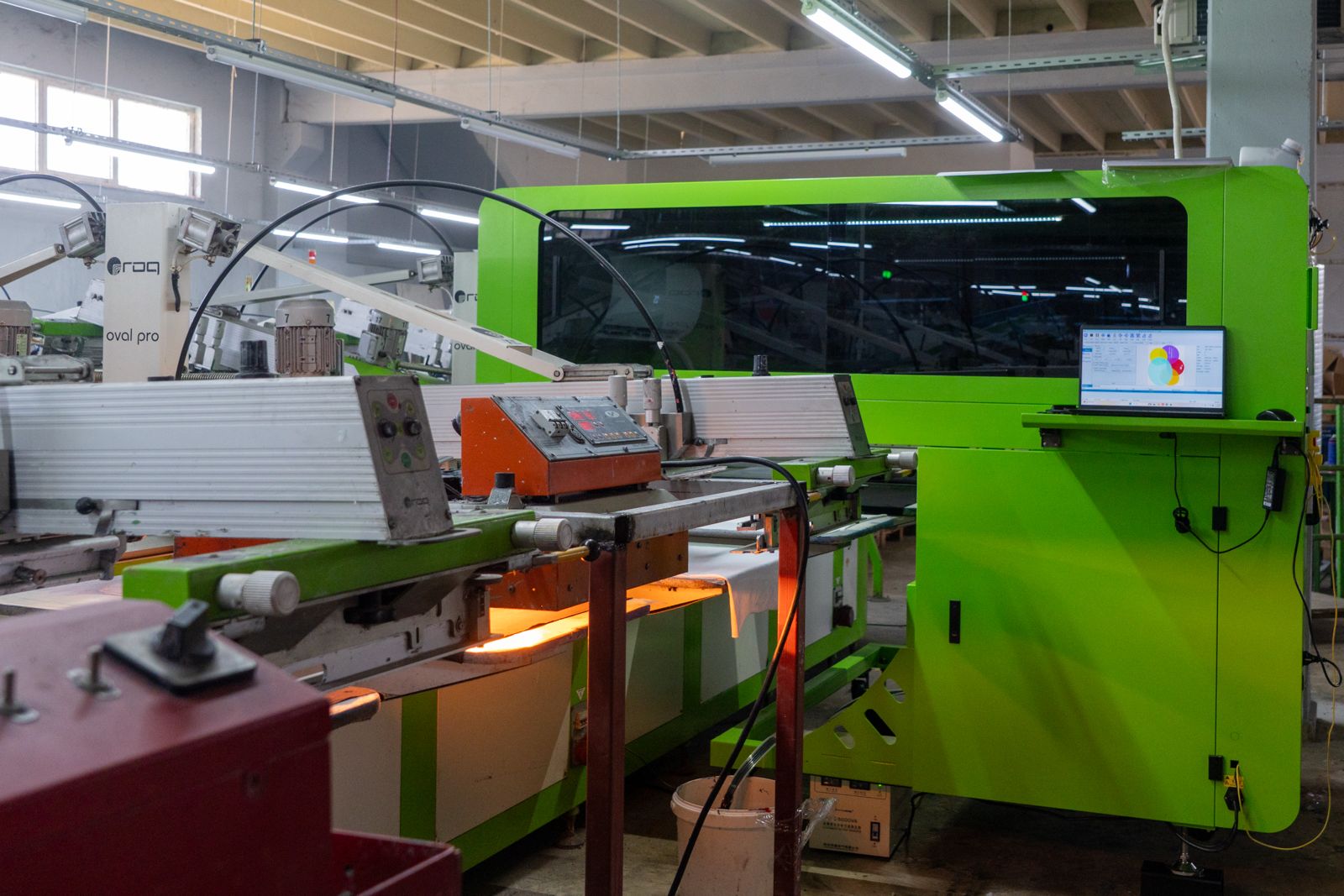
DTG printing, short for Direct to Garment printing, is a digital textile printing method that allows detailed and full-color designs to be printed directly onto garments.
Unlike traditional printing methods that may require screens or transfer films, DTG technology uses specialized digital printing equipment to apply the design directly to the textile surface.
This makes Direct to Garment printing particularly suitable for detailed graphics, photographic images, gradients and designs containing a large number of colors.
As digital textile production continues to develop, DTG has become an important printing technology for clothing brands, textile manufacturers, fashion collections and custom garment production.
What Is DTG Printing?
DTG (Direct to Garment) printing is a digital printing process in which specialized textile inks are applied directly to a garment using an inkjet-based printing system.
The basic principle is similar to digital printing on paper, but DTG printers, inks and production processes are specifically designed for textile applications.
The artwork is prepared digitally and transferred directly onto the garment. Depending on the garment color and production requirements, pretreatment and a white ink base may also be used before the color layers are printed.
This digital workflow makes it possible to reproduce complex designs without preparing a separate physical screen for every color.
How Does DTG Printing Work?
Professional DTG production consists of several stages. The exact process may vary depending on the garment, fabric, equipment and artwork, but the general workflow includes the following steps.
1. Artwork Preparation
The first step is preparing the design for printing.
The quality of the original artwork can directly affect the final result. Resolution, dimensions, transparency, colors and other technical details should therefore be checked before production.
Detailed graphics and high-resolution artwork generally provide better conditions for achieving a clean final print.
2. Garment and Fabric Evaluation
Before printing, the garment should be evaluated to determine whether the fabric is suitable for the selected DTG production process.
Fiber composition, fabric construction, surface texture, garment color and previous textile treatments can influence the final print.
DTG is commonly associated with cotton and cotton-rich garments because these fabrics can provide suitable conditions for many water-based DTG ink systems.
3. Pretreatment
Depending on the garment and printing system, the textile may require pretreatment before printing.
Pretreatment helps prepare the fabric surface for ink application and can influence color vibrancy, white ink performance and overall print quality.
This stage is particularly important in many dark-garment DTG workflows.
4. White Underbase on Dark Garments
When printing onto dark garments, a white ink layer is often printed before the colored design.
This white underbase creates a foundation that allows the colors of the artwork to remain visible against the dark fabric.
Without an appropriate white base, some colors may appear significantly darker or less vibrant.
5. Direct Digital Printing
Once the garment is prepared, it is positioned in the DTG printer and the artwork is printed directly onto the textile surface.
The printer digitally controls the ink application according to the artwork.
This makes DTG particularly effective for:
- Detailed illustrations
- Photographic designs
- Gradients
- Complex graphics
- Multi-color artwork
- Fine lines and small details
6. Curing
After printing, the ink must be properly cured.
Curing typically involves controlled heat and time to help the ink achieve the required performance on the garment.
Correct curing is one of the important factors affecting the final quality and wash performance of a DTG print.
7. Quality Control
After production, the garment can be checked for:
- Color quality
- Print positioning
- Detail reproduction
- Visible printing defects
- Overall appearance
For professional garment production, maintaining consistency between multiple products is particularly important.
What Are the Advantages of DTG Printing?
DTG technology offers several advantages, especially for designs that benefit from a digital printing workflow.
Detailed Print Quality
One of the most important advantages of DTG printing is its ability to reproduce detailed artwork.
Fine lines, complex illustrations and photographic elements can be reproduced without separating every design color into an individual physical screen.
Excellent for Multi-Color Designs
Traditional screen printing usually requires separate screen preparation for individual colors.
DTG uses a digital workflow, making complex multi-color graphics easier to manage in many projects.
Suitable for Gradients and Photographic Artwork
Designs containing shadows, gradients, photographic details and complex color transitions are well suited to digital garment printing.
This gives designers greater freedom when developing graphics for fashion collections.
Flexible Design Changes
Because DTG production starts from a digital file, artwork can be changed without preparing a completely new set of physical screens.
This can be particularly useful for collections containing multiple designs or variations.
Useful for Sample and Collection Development
Before moving into larger production quantities, clothing brands often need physical samples to evaluate their designs.
DTG can provide flexibility during product development because different digital artworks can be tested on garments.
What Fabrics Are Suitable for DTG Printing?
Fabric composition is one of the most important considerations in DTG production.
DTG is commonly used on cotton and cotton-rich textiles. However, actual print performance depends on the fabric construction, ink system, pretreatment and production equipment.
Typical products may include:
- Cotton T-shirts
- Sweatshirts
- Hoodies
- Fashion garments
- Children's clothing
- Various cotton-based textile products
For blended or specialty fabrics, the material should be evaluated before production to determine the most appropriate printing method.
Can DTG Print on Dark T-Shirts?
Yes. DTG printing can be used on dark-colored garments when the appropriate production process is applied.
In many dark-garment applications, the fabric is pretreated and a white ink underbase is printed before the colored artwork.
The color layers are then printed over this white foundation.
The quality of pretreatment, white ink application and curing can have a significant effect on the final result.
What Products Can Be Printed with DTG?
Although DTG is widely associated with T-shirt printing, the technology can be used for different garment categories when the product and fabric are compatible with the printing system.
Potential applications include:
- T-shirts
- Sweatshirts
- Hoodies
- Fashion collections
- Branded apparel
- Promotional garments
- Custom clothing
DTG Printing vs DTF Printing
DTG and DTF are both digital textile printing technologies, but their production processes are different.
With DTG, the design is printed directly onto the garment.
With DTF, the artwork is first printed onto a special film and then transferred to the textile using heat and an adhesive system.
| Feature | DTG Printing | DTF Printing |
|---|---|---|
| Printing Process | Printed directly onto the garment | Printed onto film and transferred to the garment |
| Design Type | Excellent for detailed and complex artwork | Suitable for a wide range of graphic designs |
| Fabric Compatibility | Commonly used with cotton and cotton-rich fabrics | Can be suitable for a broader variety of textile applications |
| Production Workflow | Direct digital garment printing | Film printing followed by heat transfer |
Neither technology is automatically better for every project. The correct method should be selected according to the fabric, design, quantity and desired result.
DTG Printing vs Screen Printing
Another common comparison is DTG vs screen printing.
Screen printing uses prepared screens to transfer ink onto the textile surface. In multi-color designs, multiple screens may be required.
DTG uses a digital workflow and does not require the same screen preparation for each design color.
For this reason, DTG can be particularly advantageous for highly detailed and multi-color artwork, while screen printing can be highly efficient for certain repetitive, high-volume production projects.
The best choice depends on the design, quantity, fabric and required print characteristics.
What Is the Difference Between DTG and Hybrid DTG Printing?
Traditional DTG and Hybrid DTG both use digital printing technology, but the production workflow can be different.
Hybrid systems combine elements of conventional textile printing processes with digital printing technology to create alternative workflows for industrial garment production.
This approach can be particularly relevant when detailed, multi-color digital artwork needs to be integrated into higher-volume production.
You can learn more in our What Is Hybrid DTG Printing? guide.
Is DTG Printing Durable?
The durability of a DTG print depends on several factors rather than the printing technology alone.
These include:
- Fabric quality
- Fabric composition
- Pretreatment
- Ink system
- Printing parameters
- Curing conditions
- Garment care and washing
A properly controlled production process is therefore essential for professional results.
What Determines DTG Print Quality?
A professional DTG print is the result of several production variables working together.
Important factors include:
- High-quality artwork
- Correct fabric selection
- Appropriate pretreatment
- Accurate printer settings
- Proper white ink application when required
- Color management
- Correct curing
- Quality control
Is DTG Printing Suitable for Clothing Brands?
Yes. DTG printing can be particularly useful for fashion brands that use detailed, creative and multi-color graphics.
It can be used for:
- New collection development
- Graphic T-shirts
- Streetwear designs
- Limited collections
- Product samples
- Multi-design production
However, production quantity should also be considered. For larger orders, alternative technologies such as screen printing or Hybrid DTG may provide advantages depending on the project.
DTG Printing in Turkey
Turkey has a well-established textile and apparel manufacturing industry serving both domestic and international fashion markets.
For clothing brands sourcing production from Turkey, integrating garment manufacturing and textile printing within the same supply ecosystem can simplify production planning.
When searching for a DTG printing manufacturer in Turkey, brands should evaluate not only the printing technology but also production consistency, textile experience, sample development, quality control and the ability to manage professional production requirements.
How to Choose a Professional DTG Printing Manufacturer
Choosing the right printing partner is especially important for brands producing garments for retail.
A professional supplier should be evaluated according to factors such as:
- Textile printing experience
- Printing technology
- Fabric knowledge
- Sample capabilities
- Color consistency
- Production capacity
- Quality control
- Communication and production planning
Choosing a printing manufacturer based only on the lowest unit price may not provide the best overall production result.
Professional DTG Printing with Efor Baskı
Efor Baskı provides professional textile printing solutions for clothing brands, textile companies and garment production projects.
Depending on the artwork, garment, fabric composition and production quantity, the appropriate printing process can be evaluated for each project.
For brands requiring larger production volumes, DTG can also be evaluated alongside technologies such as Hybrid DTG and screen printing.
If you are looking for professional DTG printing in Turkey or need a textile printing partner for your clothing brand, contact Efor Baskı to discuss your project and production requirements.